
Hello, world: how we plan an explainer, scene by scene
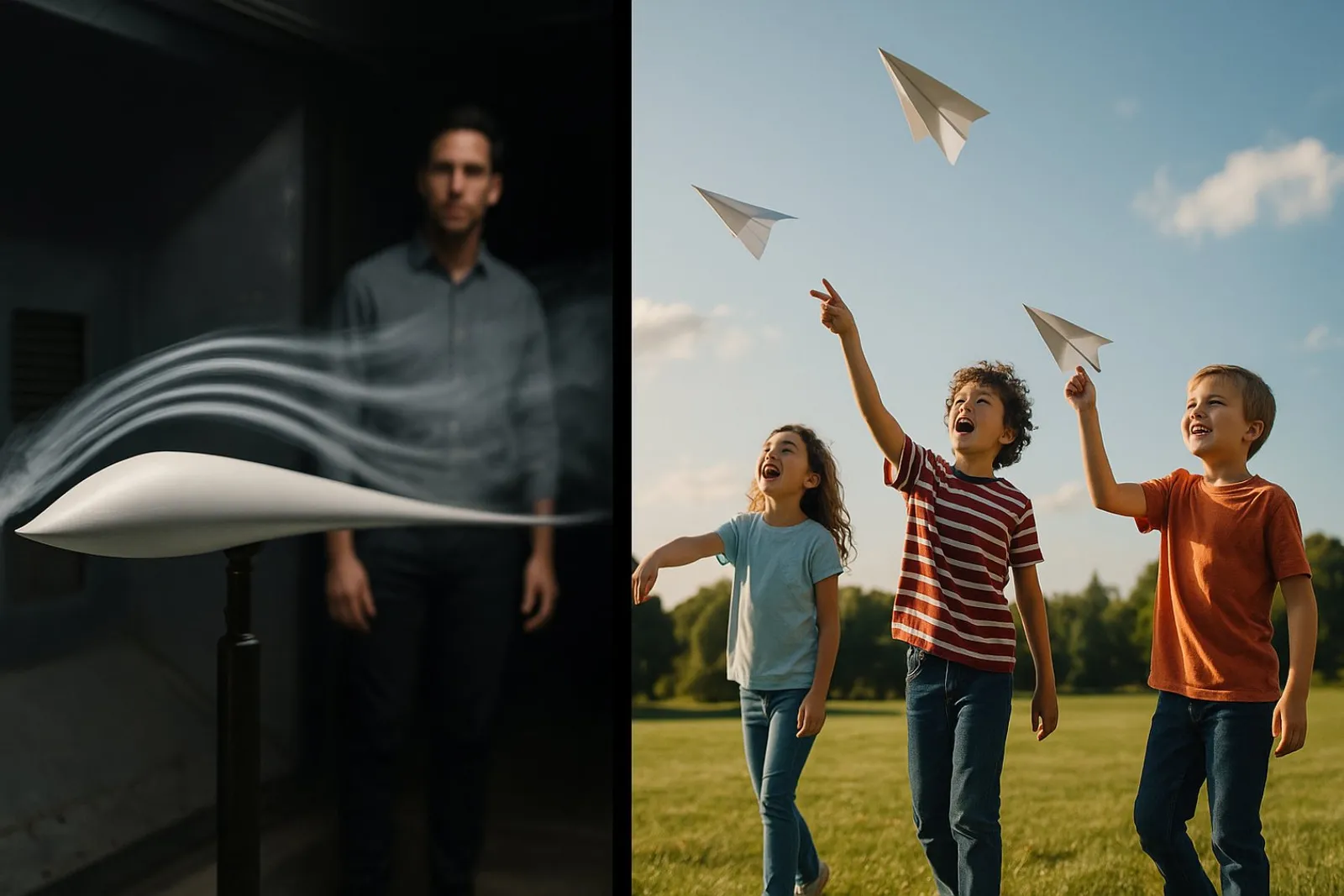
Every explainer we have made started the same way: a question we could answer in one sentence, and no idea what the viewer should be looking at while we said it. This post walks through how a short video about flight went from that sentence to a plan we could shoot.
Start with the question, not the script
The video had to answer “why does a paper plane fly?” Before writing a line, we listed what a viewer already believes and what they will get wrong:
- Planes are pushed up by air hitting the bottom of the wing.
- Heavier planes need bigger wings.
- Paper planes are just small real planes.
Each of those became a scene, because each needed its own picture to undo it.
Break the draft into scenes
Once the draft existed, we split it wherever the picture had to change. That gave us nine scenes, and a table we could argue about:
| Scene | Line | Visual |
|---|---|---|
| 1 | “Why does this fly at all?” | Kids throwing paper planes |
| 2 | “Air is doing more than you think.” | Smoke over an airfoil |
| 3 | “Now fold one badly.” | Close-up of a crumpled nose |

Name your scenes so you can find them
We gave every scene a short slug in the script, which makes the edit notes readable:
S02-smoke-airfoil   0:18-0:34   B-roll + VO
S05-living-room     1:02-1:20   A-cam, slow push
What we would tell our past selves
Write the visual next to the line it belongs to, or you will lose it by the shoot.
That is the whole idea behind writing in scenes. The real articles start next week.